FREE US SHIPPINGLESS SCREEN TIME. MORE GAME TIME.30-DAY MONEY-BACK GUARANTEE
BEAM RIVALS0

THE BEAM RIVALS PLAY JOURNAL

GOOD TIMES. GOOD COMPANY.

MAKE ROOM
FOR PLAY.

Small ideas for big rematches.
Set up the room. Bring everyone in.
Make tonight a little more memorable.

THE FIRST ROUND · 3 MIN READ

YOUR LIVING ROOM.
YOUR FIRST ARENA.

You don't need a giant basement. Start with a clear space, an easy goal, and a little room for a rematch.
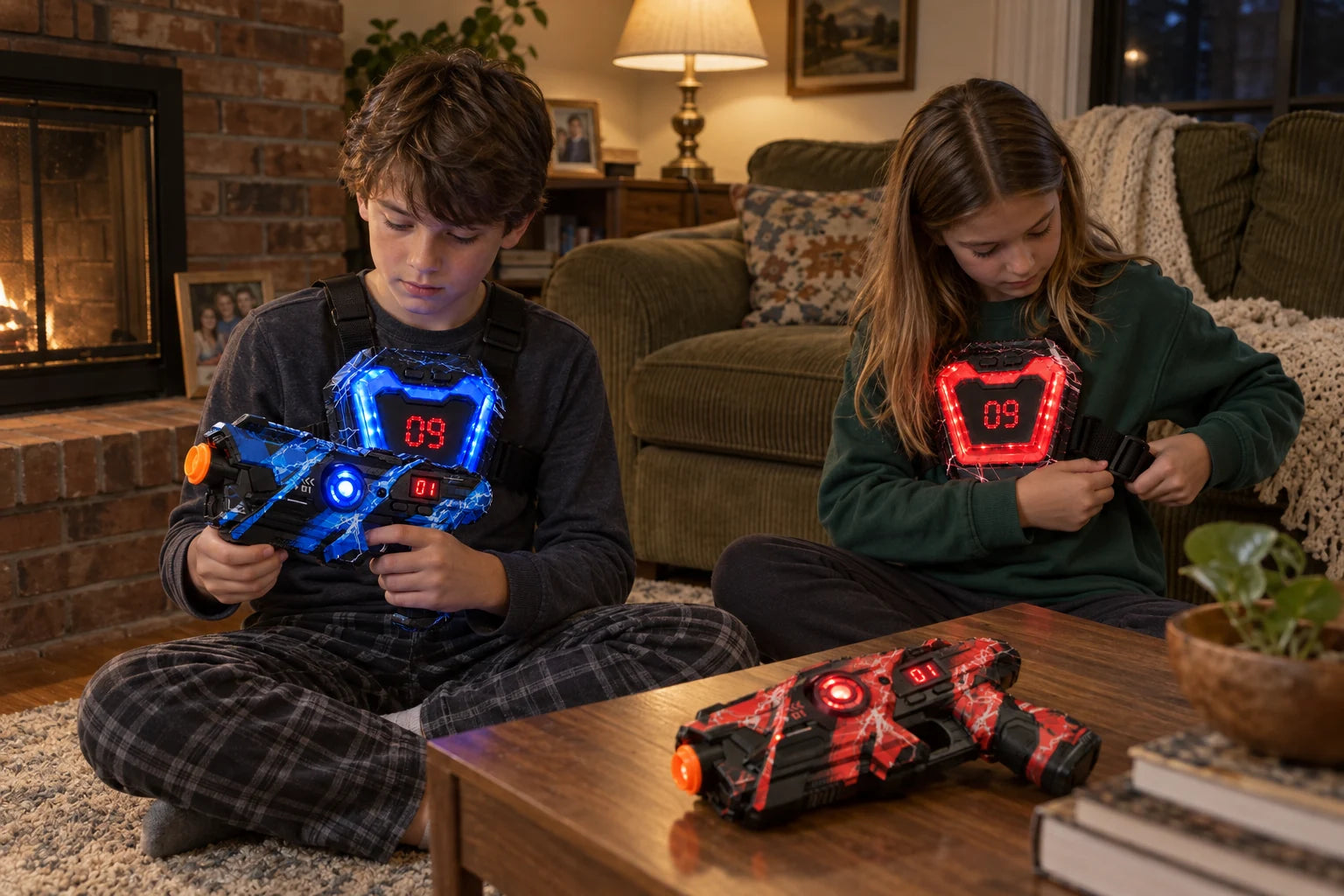
A boy checking his blue blaster while his sister adjusts her red chest target beside a sofa
Keep the room familiar. Give the evening a new game plan.

1. Make a clear play space.

Move drinks, breakables, and loose cables out of the way. Keep doors, stairs, and exits clear. Agree on boundaries before play; furniture stays upright, and every route stays at floor level. Keep enough light to see where you're stepping, even when the gear is glowing.

2. Get to know the gear.

Give each player one blaster and one chest target. BEAM RIVALS uses infrared signals rather than projectiles, with light-up gear and digital displays. Follow the supplied setup instructions, adjust the target strap comfortably, and check that everyone's target stays visible. The set is intended for ages 8 and up.

3. Play a practice round.

Let everyone try the controls and hit feedback before keeping score. Start with the same mode for all players. Agree on a clear “pause” call: when anyone says it, everyone stops. No contact, no climbing, and no chasing into another room.

4. Keep the first match simple.

Split into balanced teams and try a three-minute round. Choose your winning condition before starting, using the game's own scoring and reset instructions. Swap sides for the rematch so nobody keeps the best position.

THE FIRST-NIGHT RULE

Learn the game together. Save the serious scoreboard for later.
NEXT UPParents. You're playing too.

TOGETHER TIME · 2 MIN READ

PARENTS.
YOU'RE PLAYING TOO.

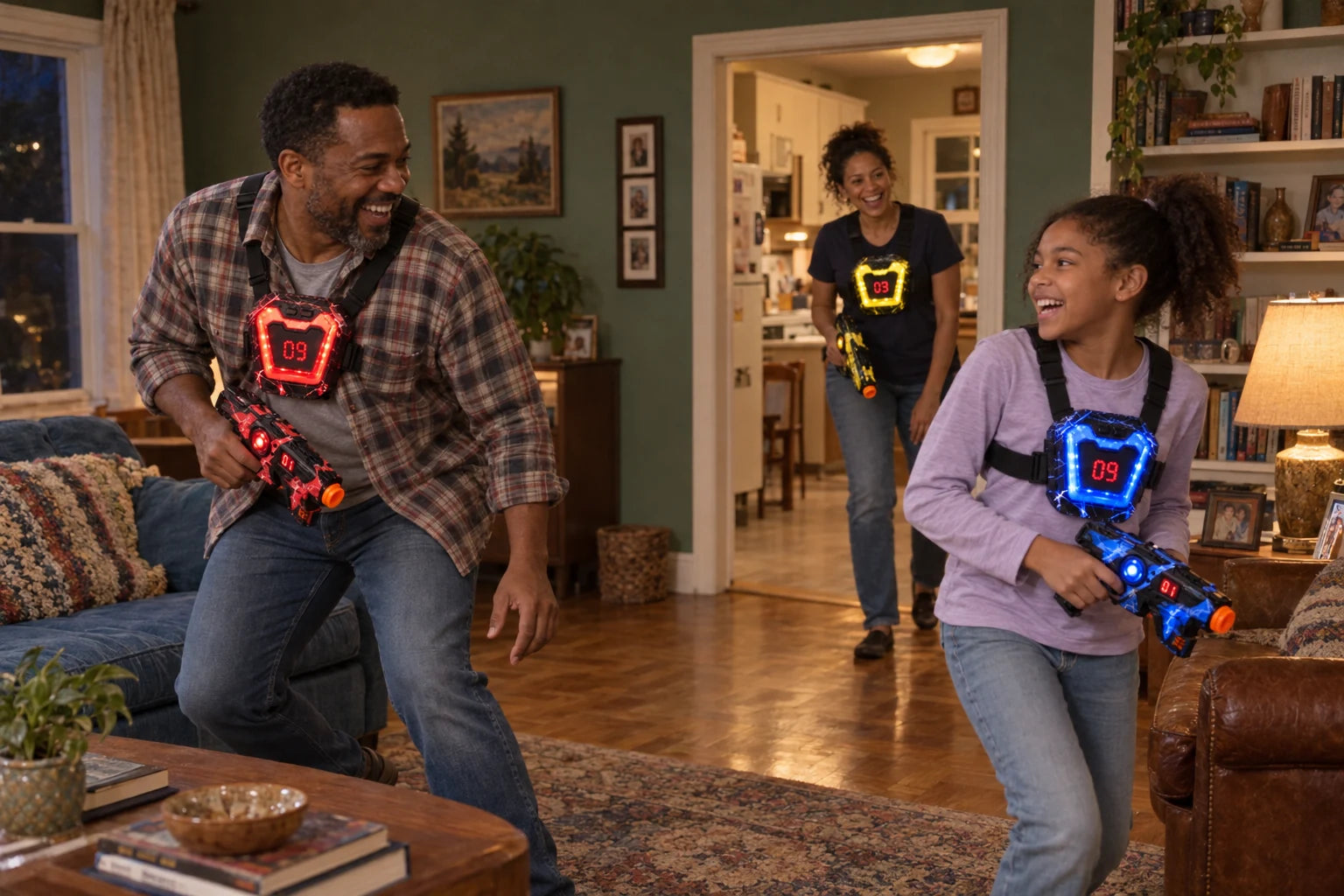
The best team name might come from Dad. The best hiding spot might already belong to Grandma. Everyone gets a turn.

A father and daughter laughing together while their mother joins a laser tag game
A game night is an invitation, not another appointment.

Start with an invitation.

Try “one quick game before the movie” instead of planning a whole evening. Put phones to one side by agreement, choose silly team names, and give everyone a choice about joining. Someone who would rather keep time can be the round host.

Mix the teams.

Pair experienced players with beginners instead of always making it adults versus kids. Let new players choose their side of the room first. Change partners after each match so the evening feels shared, not like the same two people winning again.

Choose a pace that fits the group.

Keep movement controlled and routes on the floor. A smaller space can work for a gentle, mostly stationary round with clear boundaries. Ask what feels comfortable for everyone, keep the space visible, and take breaks whenever someone wants one.

Let the score be only part of it.

Notice a clever team plan, a fair restart, or somebody helping a first-time player. Rotate the job of announcing the next round. The useful part of a family game is that everyone has something to do together.

Finish with a shared choice.

One final rematch, then a snack or the movie you planned. If you're giving the set as a gift, add a handwritten invitation to the first game night. You're giving them a reason to gather as well as something to unwrap.

MAKE IT YOUR TRADITION

Same people. New teams. A different story every time.

NEXT UPA birthday. A whole new game.

PARTY PLAY · 3 MIN READ

A BIRTHDAY.
A WHOLE NEW GAME.

Give the party a little structure, then let the players bring the personality. Here's a simple plan to make your own.

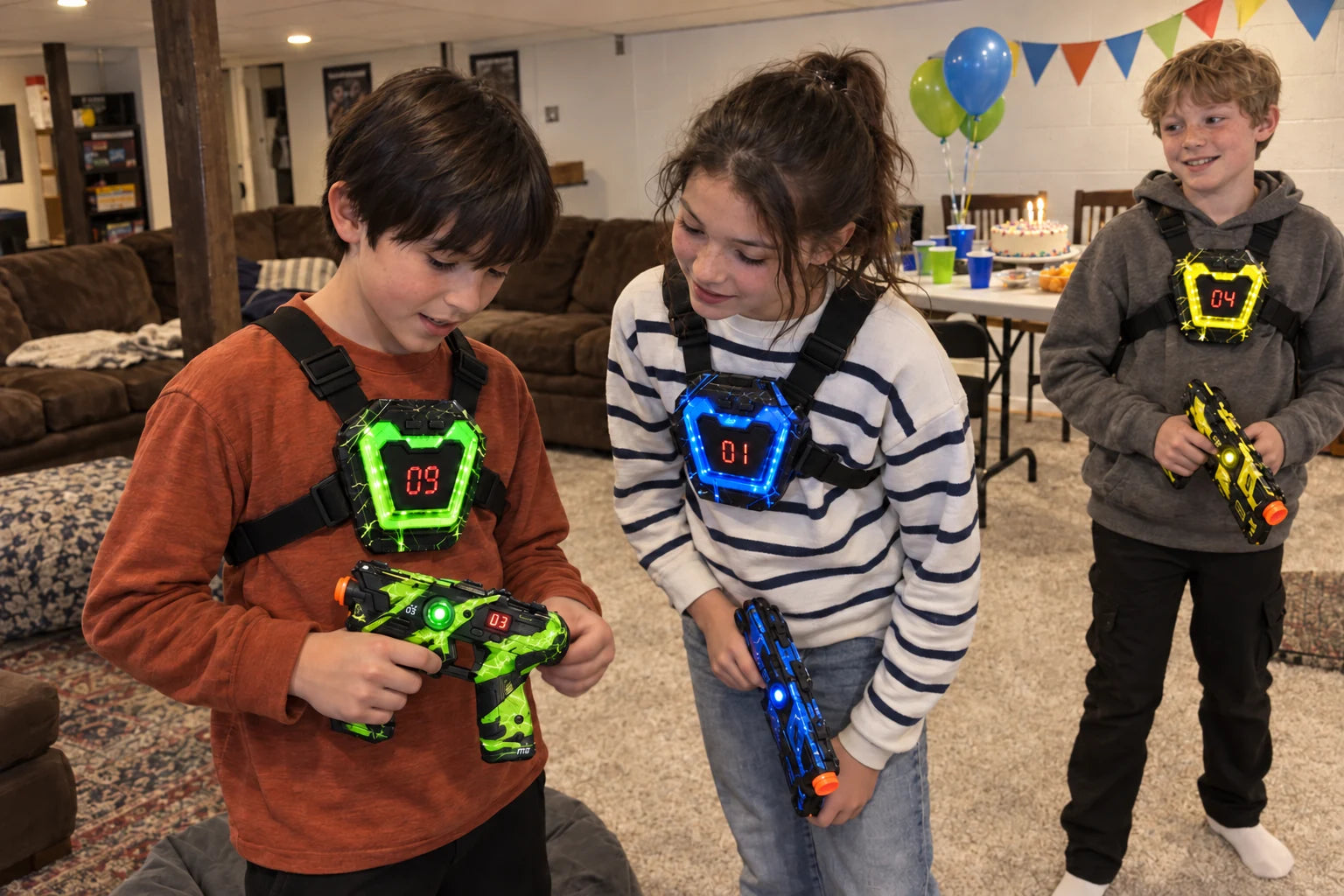
Children with green, blue and yellow laser tag sets during a birthday party in a basement rec room
One blaster and one chest target for each active player.

Before guests arrive.

Check the gear and decide how many players can take a turn at once. Set clear floor-level boundaries away from stairs, doors, and breakables. Keep a separate place for drinks and snacks. A grown-up hosts the rounds and explains the pause signal.

Minutes 0–5: meet your squad.

Let guests pick team names. Explain the same short rules to everyone: no contact, no climbing, keep targets visible, and stop when the host calls a pause. Check that each active player has a comfortably fitted target.

Minutes 5–10: warm up.

Run a practice round without a party leaderboard. Demonstrate the controls using the included instructions. New players can ask questions or try again before the matches begin.

Minutes 10–25: short rounds, fair turns.

Try three-minute matches with a minute between them for a reset and team change. Write the next players' names on a rotation list if there are more guests than sets. Waiting players can keep time or cheer; nobody has to sit out twice before everyone has taken a turn.

Minutes 25–30: the final rematch.

Let the birthday player choose the last team names or announce the round. Keep the same fair rules. Finish together, put the gear aside, and head for the cake.

SMALL EXTRA. BIG PERSONALITY.

Make paper team badges and a party scorecard. The guests can help name the arena.

START WITH THE SETUPYour living room. Your first arena.

NEXT STOP: GAME NIGHT

YOUR BAG.

View full bag ↗

YOUR NEXT ROUND
STARTS HERE.

Pick a set. Bring your rivals.